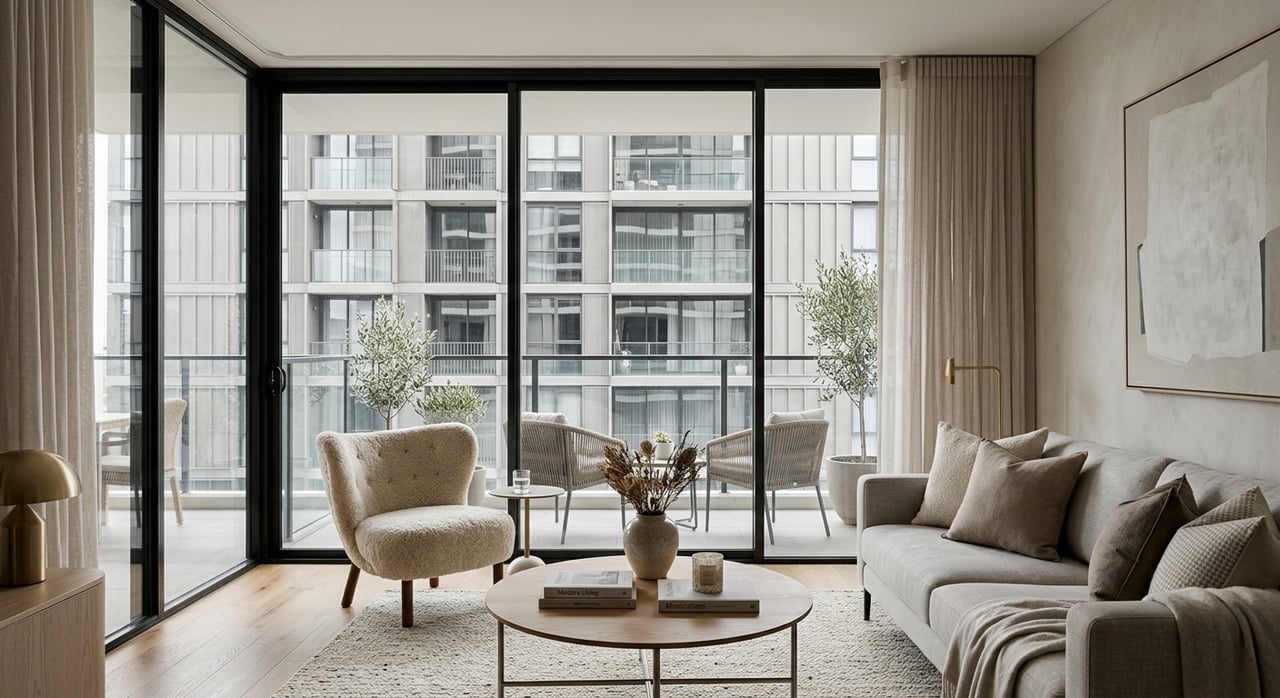
If you are deciding between a Mississauga condo and an Oakville home, the numbers can feel straightforward at first, but the lifestyle tradeoffs are where the real decision happens. You may be weighing convenience against space, or wondering whether lower-maintenance condo living is worth giving up the privacy and control of a freehold property. This guide will help you compare price, upkeep, location, and long-term fit so you can make a more confident choice. Let’s dive in.
Price Starts the Conversation
For many buyers, the biggest contrast is the entry point. TRREB’s February 2026 market watch reported the average price for a Mississauga condo apartment at $514,936. In TRREB’s April 2026 market watch, Oakville detached homes averaged $2,058,983, while Mississauga detached homes averaged $1,364,097.
That gap matters because it changes what is realistically available to you. A condo in Mississauga may offer a far lower total purchase price, even in a premium building. An Oakville freehold home, especially a detached one, typically requires a much larger capital commitment.
There is also a market timing angle to consider. TRREB’s Q4 2025 condo report noted that GTA condo apartment sales were down 15 percent year over year and the average condo price fell 5.1 percent to $652,945. In practical terms, condo buyers have generally had more room to negotiate than in tighter housing segments.
Price Per Square Foot Tells a Different Story
Total price is only part of the picture. In Mississauga, current third-party condo ranking pages show City Centre towers clustering around roughly $760 to $787 per square foot, while premium Port Credit waterfront buildings can range from roughly $886 to $1,171 per square foot. By comparison, a current Oakville detached listing on Wahi showed $588 per square foot.
This is where buyers can get surprised. A luxury condo in Mississauga may be much cheaper overall than an Oakville detached home, but it can still be more expensive on a per-foot basis. If you care most about efficient ownership and convenience, that may feel worthwhile. If you care most about interior space and land value, the math can point you in a different direction.
Mississauga Condos Fit Urban Convenience
Mississauga offers a very specific kind of ownership experience, especially in its most established condo areas. The city describes the Downtown Core as its Urban Growth Centre, with the highest densities, tallest buildings, and broadest mix of uses. The City Centre Transit Terminal, located at the northwest corner of Square One, is the city’s main transit hub.
That planning context matters because it shapes daily life. If you want a more urban, transit-oriented routine, Mississauga condos can place you near shopping, services, and major transit connections. This can be especially appealing if you prefer a lock-and-leave lifestyle or want easier day-to-day movement without relying on a large property.
Port Credit offers a different version of condo living. The city’s waterfront planning highlights a full-service marina, trail connections, a new bridge linking the area to the GO station, and the Brightwater redevelopment, a 72-acre mixed-use project with about 18 acres of planned parkland. For buyers drawn to waterfront living with a more compact ownership model, that combination can be very compelling.
Who Mississauga Condo Living Often Suits
Mississauga condos often appeal to buyers who want:
- A lower purchase price than a detached home
- Shared maintenance rather than full property upkeep
- Transit-oriented living in City Centre
- Waterfront access and a compact lifestyle in Port Credit
- Amenity-rich buildings and simpler travel flexibility
Oakville Homes Offer Space and Control
Oakville presents a different ownership model. If you are choosing a freehold home, you are often buying not just a house, but more land, more privacy, and more direct control over how the property is used and maintained. For many buyers, that is the main reason to stretch beyond condo ownership.
Oakville also has a well-defined sense of place in several established areas. The Town notes that the Old Oakville Heritage Conservation District extends south of Robinson Street to the lakefront from Sixteen Mile Creek to Allan Street, and that the district includes early homes, many built before 1860. Along the waterfront, Oakville maintains trails, beaches, and harbours, while also advancing planning work in areas such as Bronte.
This setting tends to attract buyers who place a premium on character, lot size, and control. Oakville GO and Bronte GO support commuter access, and the Bronte GO MTSA is being planned as a complete, transit-supportive community. Even so, the feel is generally less vertical and more property-centered than Mississauga’s Downtown Core.
Who Oakville Freehold Living Often Suits
Oakville homes often appeal to buyers who want:
- A yard, garage, and more separation from neighbors
- More privacy and customization potential
- Long-term value tied to land and location
- A home with heritage character or established streetscapes
- Direct control over maintenance and capital improvements
Maintenance Is One of the Biggest Deciding Factors
Lifestyle is not only about where you live. It is also about what you are responsible for once you own it. This is one of the clearest differences between a Mississauga condo and an Oakville freehold home.
The Condominium Authority of Ontario explains that condo fees fund insurance, common elements, and reserve funds. It also notes that condo corporations maintain common elements and standard unit elements, while owners are responsible for their own units and any non-standard improvements. Boards and managers oversee operations, and owners are required to pay condo fees on time.
For many buyers, that structure is a benefit. You still own your home, but much of the exterior and shared-building planning is handled through the condominium framework. That can make condo ownership feel more predictable from a maintenance standpoint, especially if you want less hands-on responsibility.
With a freehold home, the owner is normally responsible for the entire house. That includes the roof, exterior walls, lawn, garden, driveway, and garage. The advantage is greater control. The tradeoff is that all maintenance planning and larger capital costs sit directly with you.
A Simple Maintenance Comparison
| Option | What you typically handle | What that often feels like |
|---|---|---|
| Mississauga condo | Your unit, plus any upgrades beyond standard finishes | Lower day-to-day upkeep, but ongoing condo fees |
| Oakville freehold home | The full house and lot, including exterior areas | More control and privacy, but more hands-on planning |
Location Shapes Daily Life
Your choice may come down less to market statistics and more to how you want your week to feel. Mississauga City Centre is built around density, transit, and mixed-use planning. If you value quick access to services and a more urban rhythm, that environment can be a strong match.
Port Credit adds a waterfront dimension, but it is also an area the City identifies as older and undergoing infill and intensification. Mississauga’s Port Credit storm drainage master plan was created to address stormwater, severe weather, and future development pressures in that area. If you are considering a waterfront condo there, it is wise to think not only about the building, but also about the broader neighborhood context and how it is evolving.
Oakville, by contrast, often appeals to buyers who prioritize a home-centered lifestyle. Waterfront trails, beaches, harbours, and established residential areas create a different pace and pattern of use. If your ideal home life includes more private outdoor space and a stronger sense of separation, Oakville may align more closely with that vision.
Long-Term Fit Matters More Than the First Showing
It helps to think beyond what impresses you on day one. Mississauga is directing growth to the Downtown Core, major nodes, and major transit station areas, with the Downtown Core identified as the city’s highest-density area. That supports the case for condo ownership if you want to be where future urban growth is concentrated.
Oakville’s official planning framework and transportation planning both look ahead to 2051, and Halton is expected to grow to more than 1.1 million people by that time. For buyers who value land scarcity, established character, and direct ownership control, Oakville freehold homes can be especially appealing over the long term.
The better option is not the one with the flashier lobby or the larger backyard. It is the one that best matches how you want to live, how much responsibility you want to carry, and how you want your money working for you.
How to Choose Between Them
If you are still deciding, start with a few practical questions:
- Do you want the lowest entry price, or the most space and land?
- Would you rather pay condo fees for shared maintenance, or manage the whole property yourself?
- Is transit access a top priority in your daily routine?
- Do you want a lock-and-leave home, or a property you can customize more freely?
- Are you more drawn to a vertical waterfront or downtown lifestyle, or to a detached home setting with more privacy?
For many buyers, the answer becomes clearer once they compare not just listings, but ownership models. A Mississauga condo can be an elegant solution for convenience and simplicity. An Oakville home can be the stronger fit if you want permanence, privacy, and more room to shape the property over time.
If you are weighing both options and want a clear, discreet conversation about what fits your goals, Jane Weatherhead can help you compare the opportunity with confidence.
FAQs
What is the average price difference between a Mississauga condo and an Oakville detached home?
- TRREB reported an average Mississauga condo apartment price of $514,936 in February 2026, compared with an average Oakville detached home price of $2,058,983 in April 2026.
What does condo ownership in Mississauga usually include?
- According to the Condominium Authority of Ontario, condo fees typically help fund insurance, common elements, and reserve funds, while the condo corporation maintains common elements and owners remain responsible for their own units and certain improvements.
What does freehold home ownership in Oakville usually require?
- A freehold owner is normally responsible for the full house and lot, including the roof, exterior walls, lawn, garden, driveway, and garage, which means more direct maintenance responsibility.
Which location is better for transit access: Mississauga or Oakville?
- Mississauga City Centre is centered on the City Centre Transit Terminal, the city’s main transit hub, while Oakville’s strongest commuter connections are typically tied to Oakville GO and Bronte GO.
Which option usually works better for a lower-upkeep lifestyle?
- A Mississauga condo often fits buyers who want less day-to-day upkeep because maintenance of common elements is handled through the condominium structure.
Which option usually works better for more privacy and outdoor space?
- An Oakville freehold home is often the better fit if you want a yard, garage, more privacy, and greater control over the property.